
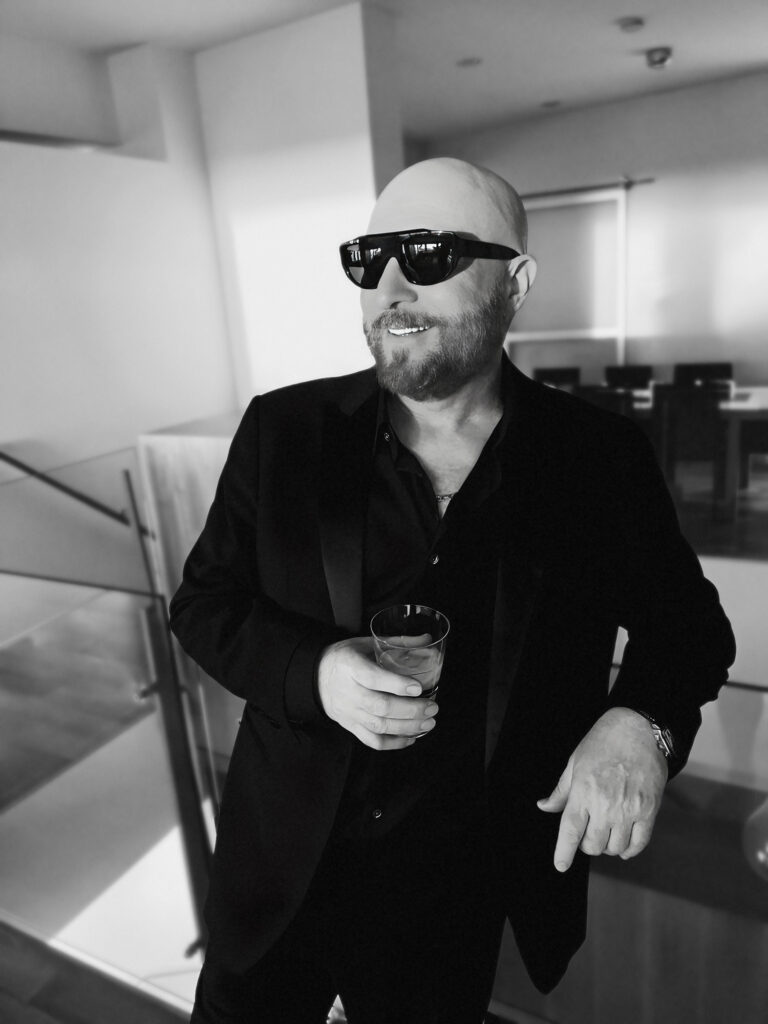
Morty Shallman is the author of numerous savagely dark and sexy novels. His new anti-war novel War and Sex is a “darkly satirical skewering of American military misadventures and homeland insecurity in the post-9/11 era.” In his first book, Tyranny of Desire, protagonist Puchy Mushkin is on a mission to “assassinate desire itself and hang it by its feet like Mussolini.”
In addition to writing novels, Morty Shallman is also a singer-songwriter. He founded his own genre with the creation of “Last of the Zacharys,” the world’s first novel with songs. With this in mind, he has written theme songs for his latest novels, The Tyranny of Desire and War and Sex.
An Interview with Author and Musician Morty Shallman
KB: You describe your work as “absurdist”? What absurd humor inspires you/ your work?
Morty: I often find that the most absurd character is the funniest. Like Andy (Chris Pratt) on Parks and Rec or Cheryl Tunt (Judy Greer) in Archer. And yet, these characters only work because they are balanced against more realistic characters and scenarios.
KB: I feel like absurdism is the defining trait of Gen Alpha. Have you seen Skibidi Toilet? And if not, apologies for bringing it to your attention. And if so, let’s relish how terrible it is.
Morty: I have not seen Skibidi Toilet. However, given certain, er, scatological plot points in The Tyranny of Desire, it might be right up my alley—or at least Puchy and Jacaranda’s!
KB: I haven’t been considering playwrights for the dark humor series, but you’ve reminded me of of the dark comedy of theater of the absurd. Like Edward Albee. Plays like The American Dream is a brutal satire of American culture and The Zoo Story is both an absurd fever dream and a completely believable horrific encounter. Eugène Ionesco is another great absurdist playwright, and I think Boots Riley has perfectly followed in his footsteps with his first flick, Sorry to Bother You.
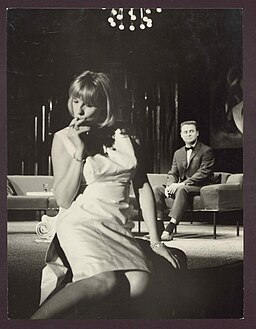
Morty: I can only add to your fascinating point about playwrights that I had the brief and amazing pleasure to meet the great Edward Albee in New York, after attending a matinee of Who’s Afraid of Virginia Woolf? on Broadway, a fabulous revival starring Kathleen Turner. He passed not long after, and I cherish my autographed Playbill.
KB: Awesome! How do you find the balance in writing absurdism, so it doesn’t go completely off the rails? How do you maintain believability so readers don’t lose their suspension of disbelief? (Again, Skibidi Toilet.)
Morty: So far, I haven’t really thought about writing a particular genre. I’m just trying to write the best story I can. So, the balance happens naturally in the writing process. That said, some might argue that my stuff doesn’t just go off the rails, it skips the tracks entirely! But, trainwrecks can be hilarious to watch, so long as you’re not a passenger.
KB: I, too, have been interested in desire as a topic of writing. Have you heard of Jacques Lacan? Do you explore any elements of psychoanalysis in The Tyranny of Desire?
Morty: I haven’t heard of him, but you’re inspiring me to look him up!
It’s funny, I’ve never had therapy, let alone psychoanalysis, even though one of my heroes, Woody Allen, swears by it, and often features it in his work. Like me, my characters believe in themselves to a fault, so they often think they have all the answers or would rather figure things out on their own. Anyway, I suppose we all might benefit from some headshrinking from time to time. But for now, I prefer to work things out through my art.
KB: Satire is an important aspect of dark comedy. How have satirical works inspired you? Are there elements of satire in your writing?
Morty: It’s sort of like the difference between Tequila and Mezcal. All Tequila is Mezcal, but not all Mezcal is Tequila. Likewise, all dark comedy is satire, but not all satire is dark comedy. If that doesn’t make sense, don’t sweat it. Drink more Mezcal, and all will come clear.
KB: When it comes to literature, to you, what makes dark comedy distinct from offensive jokes wrapped in a story?
Morty: Perhaps it’s that dark comedy intends to illuminate via the darkness, not just gross people out. And yet, much of life, and, therefore, truth, is disgusting. See what I mean? Likewise, much of life is sad, but it’s also funny. Gallows humor is a thing. We laugh in the face of death, to make sense of tragedy, and to ease the pain. Dark Comedy is the stuff of humanity. But I have no problem with offensive jokes, especially when they’re wrapped in a story. If it makes you laugh, it may also prompt you to think more deeply.
KB: What is the quintessential example of dark comedy that got you interested in writing this genre?
Morty: Lolita by Nabokov is the undisputed world champion of dark comedy literature. After that, my favorites are Portnoy’s Complaint by Philip Roth, Catch-22 by Joseph Heller, and Slaughterhouse-Five by Vonnegut. These are my literary touchstones.
KB: Catch-22 and, well, anything by Vonnegut are also mine.
Morty: Nabokov, Roth, Vonnegut. Because they are, above all else, masters of the written word. Their writing is unmatched, making their work both effective and universally appealing..
KB: Who are your favorite comedians and why? Are there any jokes, bits or specials in particular that resonate with your dark comedy style?
Morty: My favorite comedian of all time is also my favorite filmmaker – Woody Allen. I especially love how he used a variation of Groucho Marx’s famous joke that goes something like: “I wouldn’t want to be a member of any club that would have me as a member,” as the basis for his Academy Award-winning movie, Annie Hall. Woody’s twist is that he wouldn’t want to date anyone who would want to date him. Alas, I can relate to that!
KB: It’s too bad his wife/daughter didn’t feel the same way (too soon?). For me, Woody Allen falls into a category of humorists that includes Groucho Marx, Mark Twain, and Oscar Wilde: authors of a seemingly endless list of clever quotes.
Do you have a favorite darkly humorous TV series?
Morty: This is tough because many of my favorite series—Mad Men, The Sopranos, Breaking Bad, to name a few—have dark comedy elements, but are not strictly comedies, per se. The scene in Mad Men when the poor fellow from England had his foot amputated by a secretary driving a John Deere lawnmower around the office stands out as both dark and comic.
That said, Curb Your Enthusiasm is a favorite show that excels in dark comedy, as does the White Lotus series. Face it, great shows of many genres often benefit from a healthy dose of dark comedy.
KB: Indeed, and I’m so glad you said it. Part of what interests me in this series is that distinction. Humor is the least serious art, and yet it can be a profound literary tool.
Are there dark comedy works that you feel particularly resonate with your particular background or identity? How have these inspired your work?
Morty: One of my favorite reviews of my novel, The Tyranny of Desire, commented on how “Jewish” it is. So, yes, even though I’m a secular (non-religious) Jew, I am steeped in Jewish culture and especially Jewish humor. I suppose that’s why I love Woody Allen, Larry David, Jerry Seinfeld, and Philip Roth, among others. We Jews are funny, I guess, and I’m thankful that many non-Jews think so, which is why so many Jewish writers and comedians are successful.
KB: I suspected that the well-endowed protagonist, Puchy Mushkin, might be Jewish.
Morty: Oh yes!
KB: Who do you imagine to be your audience while you are writing?
Morty: I honestly write only for myself–and my dog, Primo the Maltese.
But now, alas, my poor little 17-year-old pup has passed away, so I’m writing only for myself at the moment. But here is a favorite picture of us. He was a wonderful and inspirational little guy. I miss him.

KB: For those who want to write dark comedy, give us a writing prompt.
Morty: Take the worst thing that ever happened to you. Now, make that the punchline to a gutwrenching cosmic joke and write the set-up.
Find Morty Shallman’s words and music at https://www.morty.org
About Morty Shallman’s latest dark comedy book War and Sex
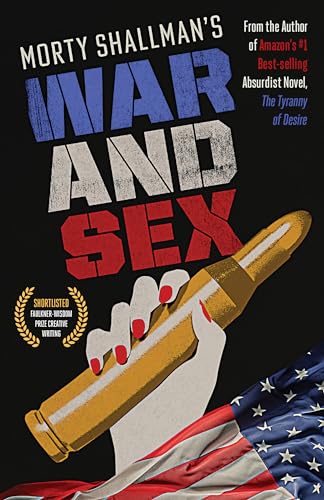
Morty Shallman’s “hilarious” and “thought-provoking” new anti-war novel WAR AND SEX tells the story of Captain Rod Solo, a Top Gun naval aviator turned ace CIA drone pilot with a problem: He can’t get it up when he’s trying to make love to his gorgeous wife, Lulu, and can’t get it down when he’s doing his job—blowing up terrorists via remote control for love of God and country.
When Rod’s peculiar form of PTSD (that’s Post-Traumatic SEX Disorder) leads to tragedy, he must trade the safety of his cubicle in Langley for the mean streets of Karachi—and the even meaner streets of Washington, D.C.—to seek and destroy his targets with his bare hands, or die trying.
What follows is a darkly satirical skewering of American military misadventures and homeland insecurity in the post-9/11 era, a “Catch-22 for the 21st Century” that explores the absurd and often paradoxical dilemmas at the heart of America’s “forever wars” abroad, and uncivil wars at home.
Will Rod succeed in his mission to destroy his enemies, foreign and domestic? Or will PT-SEX-D do him in? Grab your copy of WAR AND SEX today to find out.


Leave a Reply