A Pandemic Fixer Upper
The fall of 2020 was already more than nine dreary months into the coronavirus pandemic. No one socialized—talk on the street was at a distance with the few brave masked souls among our neighbors. Go out without a mask, even alone, or with the wrong mask could result in being dressed down by crescendoing voices, shrill and sometimes hysterical. Paranoia had overtaken everyone, justified paranoia since no one knew what was killing so many. Our poor dog Wally was baffled that people who’d been happy to see him now shied away, since there was a rumor that animals could be vectors. My always-protective husband did all our shopping, disinfecting every item before bringing it inside the house.
Our charming craftsman, once cozy, especially in the large living room with its fifteen-foot barrel ceiling painted white as whipped cream, now felt claustrophobic. But since the dog was young and needed exercise, I took him to a local park that jutted into the San Francisco Bay. Built on landfill, monstrous chunks of cement from a torn-down expressway, the park had winding paths, up and down, bordered by white and pink-flowering wild radish.
Wally loved terrorizing the ground squirrels, which always made it back to their holes safely. Occasionally in the early mornings, burrowing owls, which shared the squirrels’ homes, would poke a little feathered head above ground. They were as wary as the rodents about the white-tailed kite casting an ominous shadow, as it hovered in place above, hoping for a meal.
Wally and I came back from the walk content after the beauty of the Bay glittering in the sunshine. Given a treat, he remained happy. Oh, to be so easily diverted. My own mood quickly returned to depressed at the confinement. Living through the pandemic quarantines was like being back post chemotherapy when I’d endured months in isolation.
As pleasant and sunlight drenched as our house was, it no longer felt like a sanctuary, but a tastefully designed prison surrounded by a blooming yard. It didn’t feel like home and California itself seemed alien: too sparsely treed, too dry, too unlike the lush verdant East Coast, where I grew up and where my husband and I met.
I started clicking through real estate ads online. One caught my eye. It was definitely Victorian, with multiple stairs to confusing floors, a rabbit warren of rooms. Its address had an enchanting name: Upper Mountain Road. My husband took one brief look and said, “No f’in way. It’s in the middle of nowhere and needs a fortune in upgrades.” Though I came back to the listing many times, wheedling and cajoling—as, after all, who wouldn’t want to live on Upper Mountain Road–he stood firm.
I returned to my search. One after another, properties were rejected. Then an agent I’d contacted directed me to a listing. The property was a little over two-and-a-half-acres, containing a white stucco Victorian farmhouse and a barn ready for development. The photos were intriguing, especially the charming exterior.
“Why has it been on the market so long?” my husband asked.
Easy answer, “The pandemic.” That wasn’t affecting other houses, though. I told my inner voice to shut the hell up. To not notice the clever angles that could distort the rooms, the ‘70s appliances, the weird layout of the kitchen. To stop pondering why a Victorian farmhouse, my favorite kind, had a huge cooking fireplace, complete with crane, when the Victorians already used stoves, especially by 1894, the stated date of the house. The more obstructions in my way, the more determined I grew. A lifelong issue and part of the reason I’d become a doctor, when that career path was strewn with boulders.
Despite any misgivings I had, and certainly despite any misgivings of my spouse, I began the process of making that house ours.
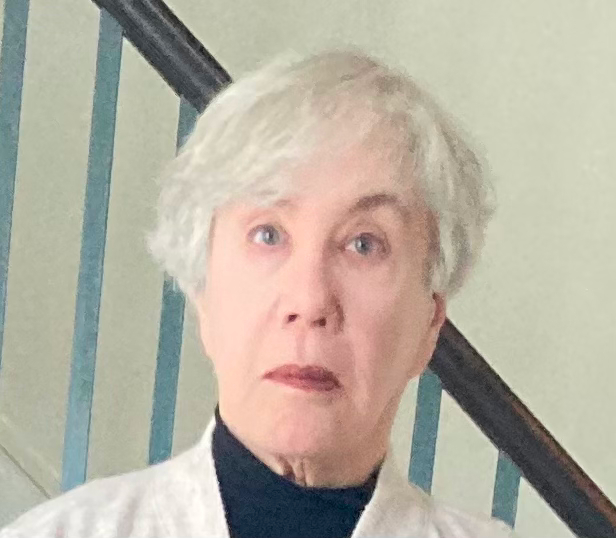
This was written by Rachel Callaghan
Leave a Reply